
Tender Response Drafter
Tender requirements, evidence-backed drafts and section sign-off in one bid workspace
- Public sector bids / B2B sales
- AI
- LLM
- RAG
- Python
- Document parsing
The project
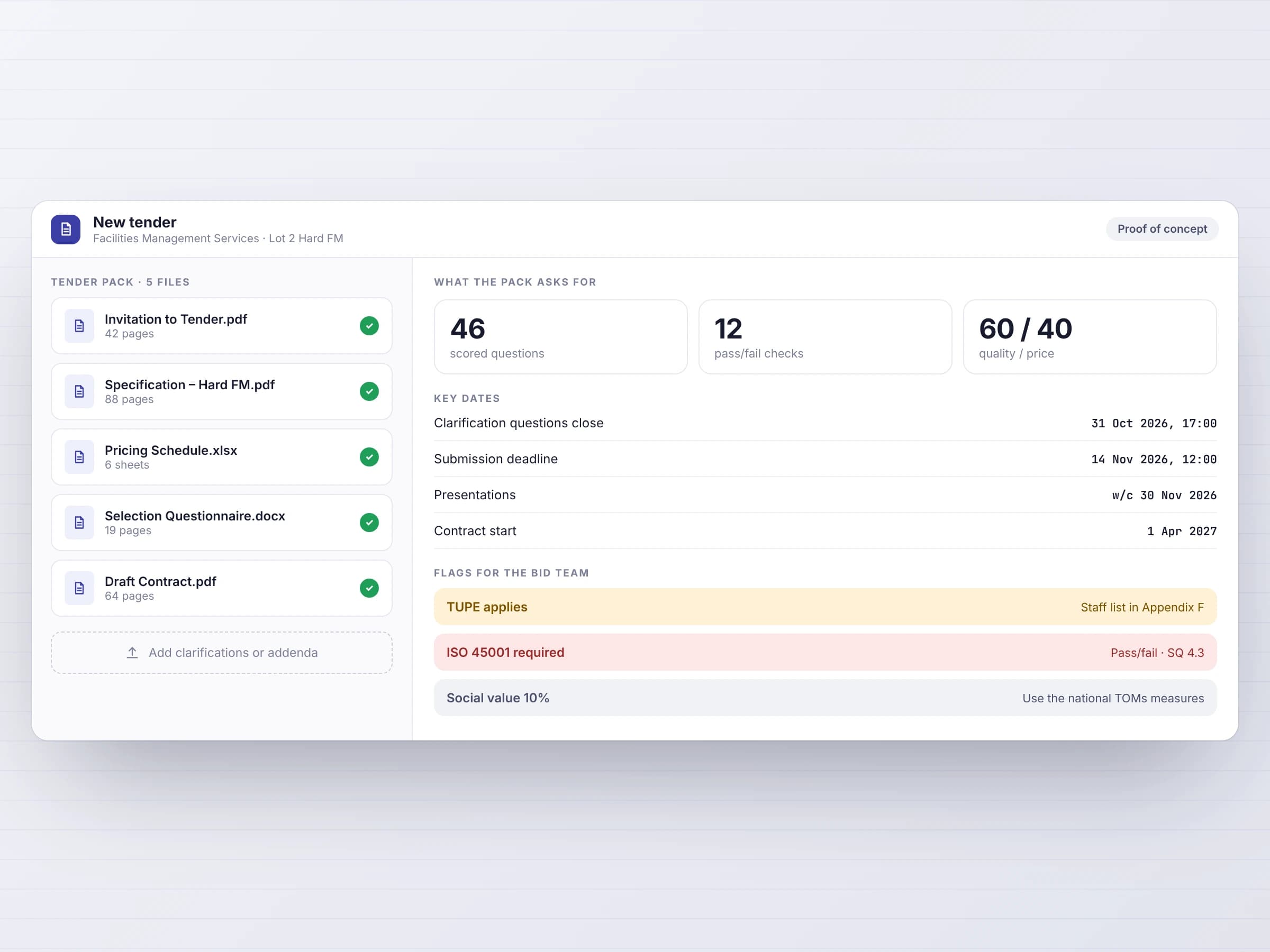
We built a tender response platform that takes a bid team from the tender pack to a reviewed response. It extracts questions, word limits, scoring weightings, pass/fail checks and key dates, then prepares draft answers using the organisation’s own bid material.
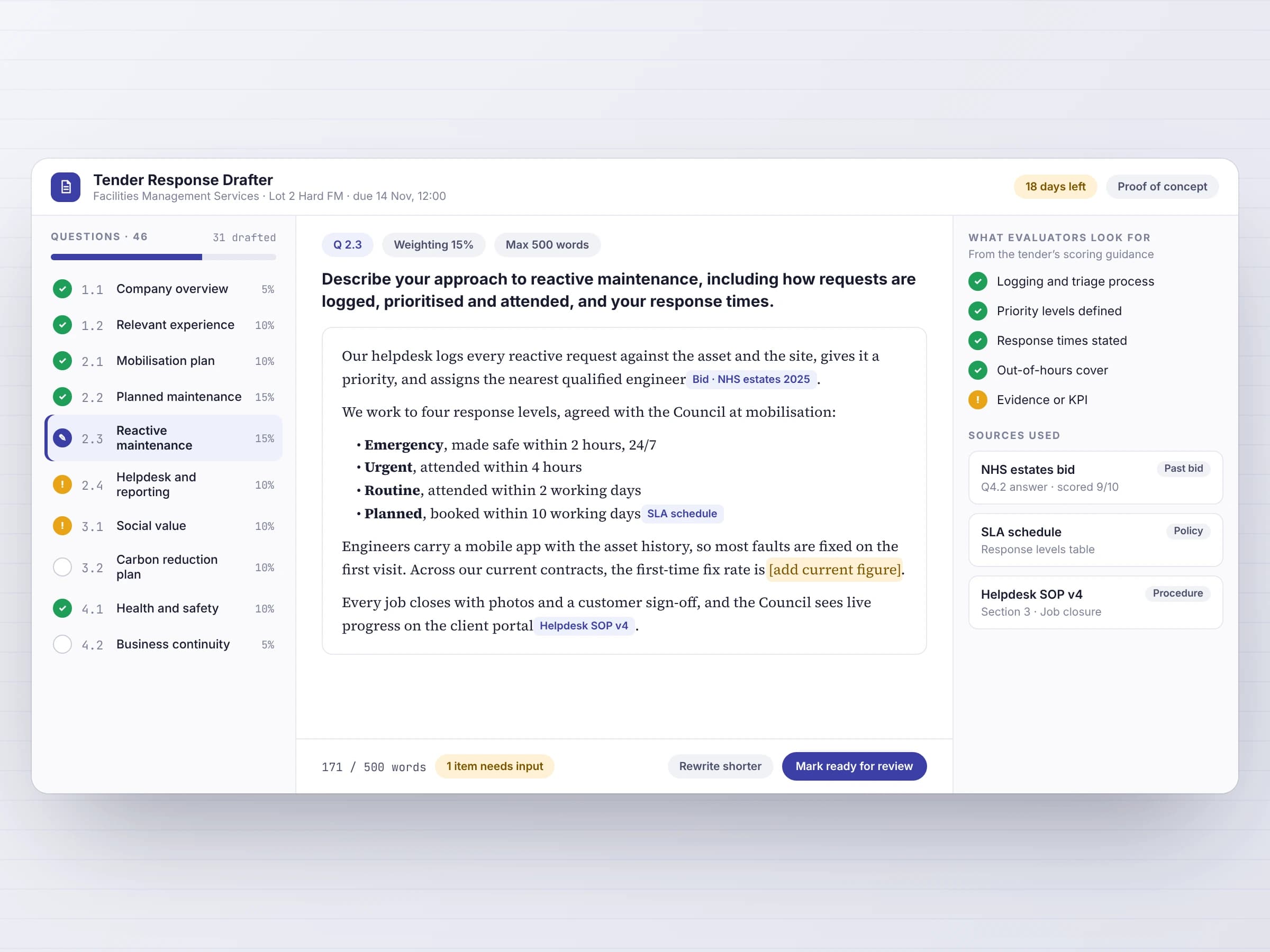
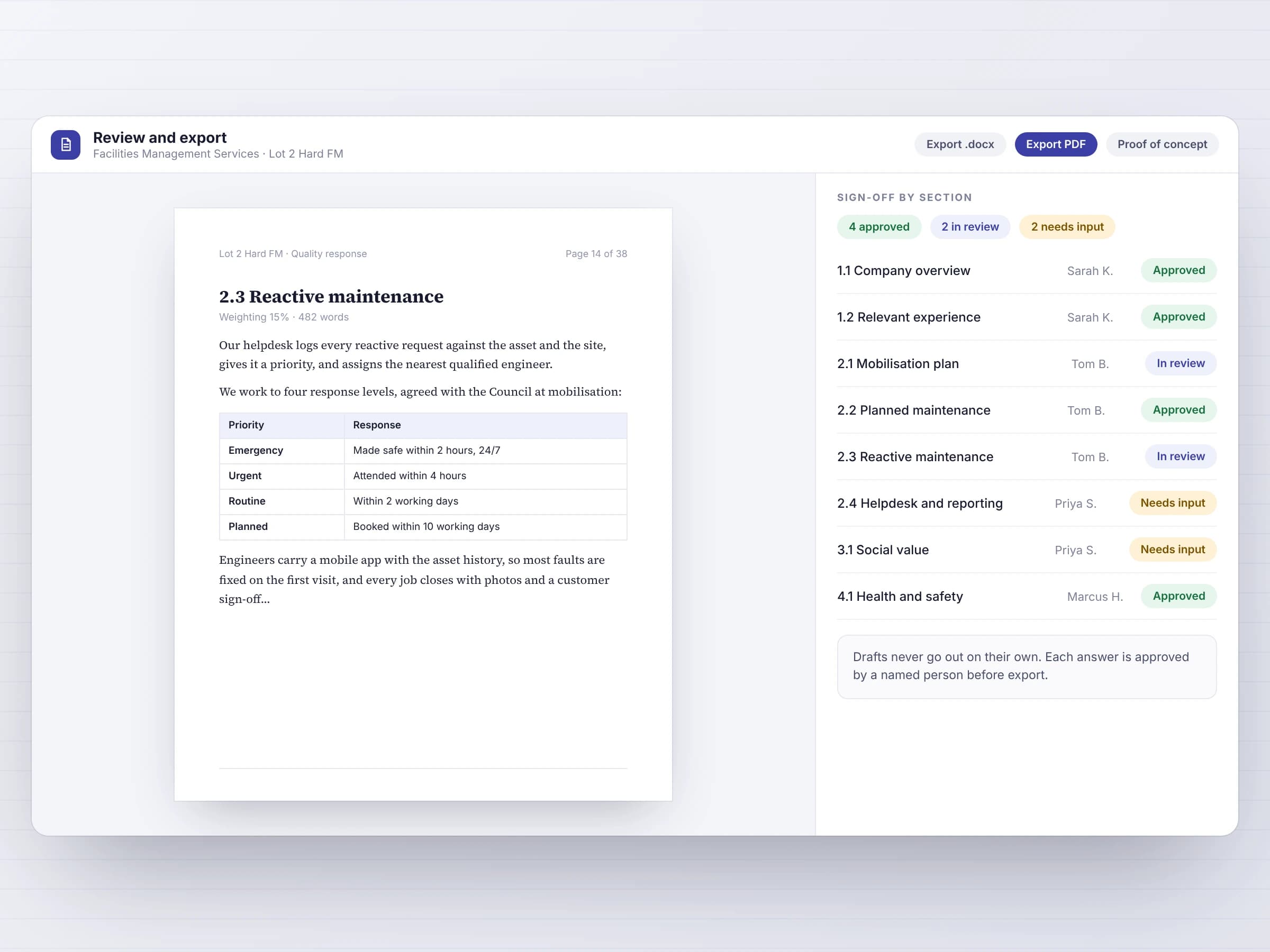
Sources remain visible beside the draft, missing evidence is flagged for input, and each section goes through named approval before export to Word or PDF.
The challenge
A tender pack can spread its requirements across an invitation to tender, specification, questionnaire and contract. Before writing starts, bid teams have to assemble the questions, deadlines, word limits and mandatory evidence into a working plan.
They then search previous submissions and policy documents for reusable material while checking that each answer addresses the scoring criteria. Missing a mandatory item or leaving an unsupported claim in the response can undermine that work. The challenge was to connect requirements, evidence and review in one workflow.
The solution
We built a document-parsing workflow that turns the tender pack into a structured list of questions and requirements. Each scored question carries its weighting and word limit, while key dates and pass/fail checks are surfaced for the team to review early.
The drafting workspace retrieves relevant material from past bids, policies, procedures and certificates. It prepares an answer within the word limit, shows its sources and marks unsupported points as requiring input. Scoring guidance appears as a checklist beside the answer, helping reviewers judge the draft against the question.
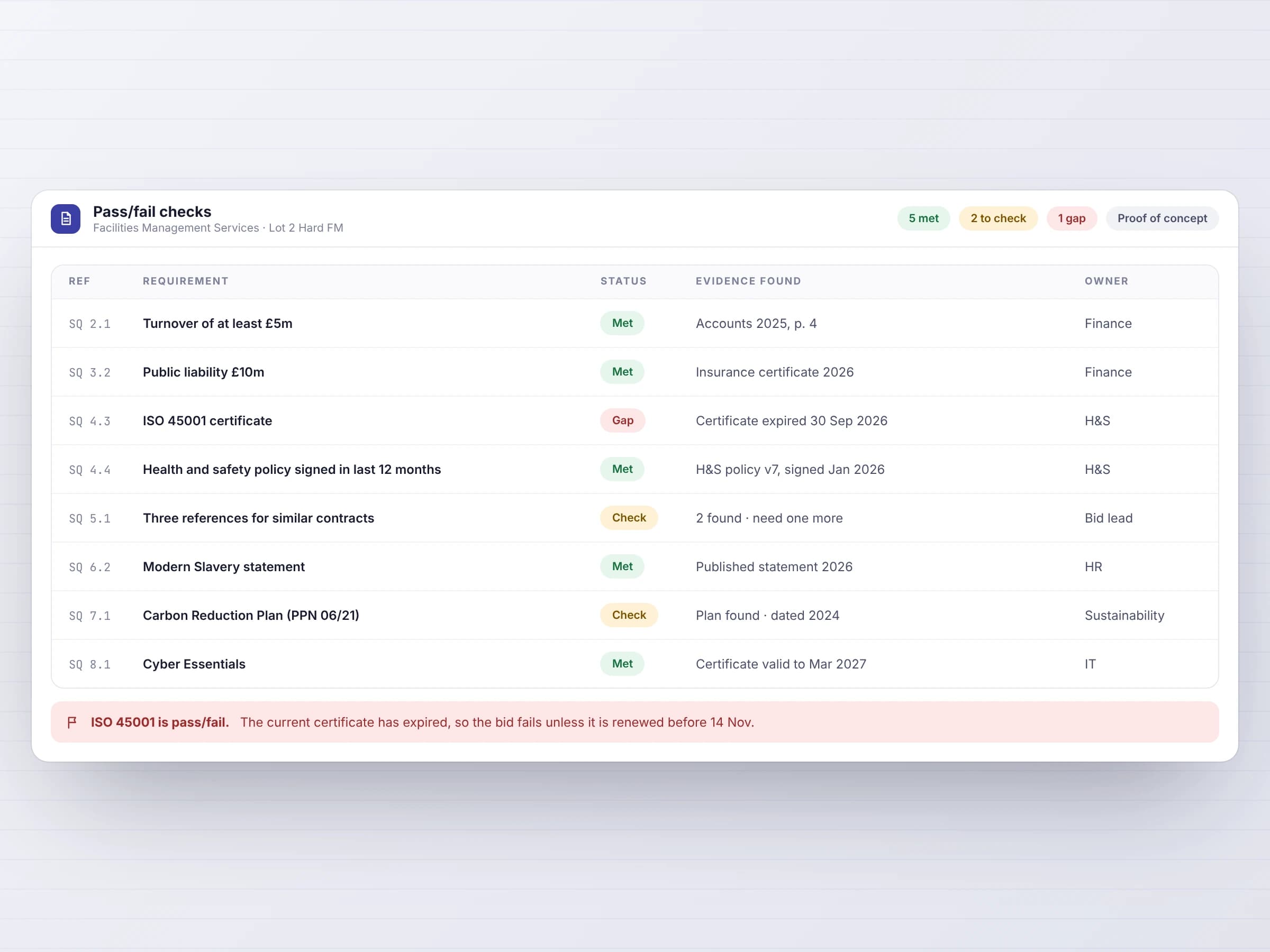
Mandatory requirements are matched to evidence, with gaps assigned an owner. Named reviewers sign off individual sections before the approved material is assembled into a formatted Word or PDF response. The result is a connected bid workspace in which the team can trace a requirement through its evidence, draft and approval.
What it does
- Reads the whole tender pack: ITT, specification, questionnaire, contract
- Every question with weighting, word limit and due date
- Pass/fail checks matched to your evidence
- Drafts from past bids, policies and procedures, with sources shown
- Gaps marked for input instead of invented
- Scoring guidance turned into a checklist per answer
- Section sign-off and export to Word or PDF
How we built it
- Structure the evidence library: Organised past bids, policies, certificates and case studies by topic for retrieval during drafting.
- Parse the tender pack: Built extraction of questions, scoring weightings, word limits, key dates and mandatory requirements.
- Connect drafting to evidence: Combined retrieval and generation with visible sources, scoring checklists and flags for missing input.
- Build review and export: Added named section approval, ownership of evidence gaps and export of approved responses to Word or PDF.
The results
- Sourced Drafts
- Flagged early Pass/fail gaps
- Per section Sign-off
Backendz & Tender Response Drafter: Highlights
More case studies
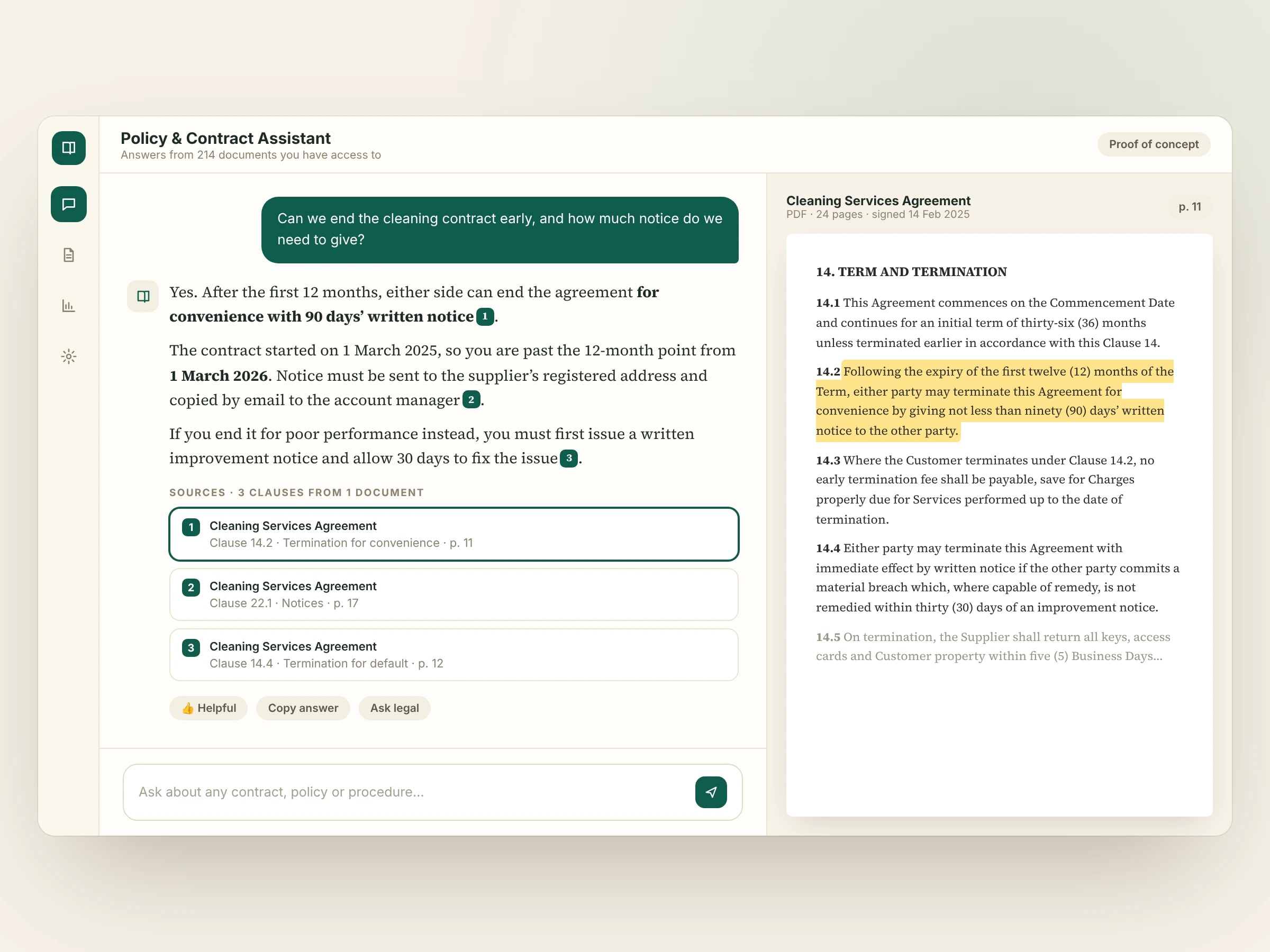
- Policy & Contract AssistantAnswers from contracts, policies and procedures, with the exact clause beside each response.View case study
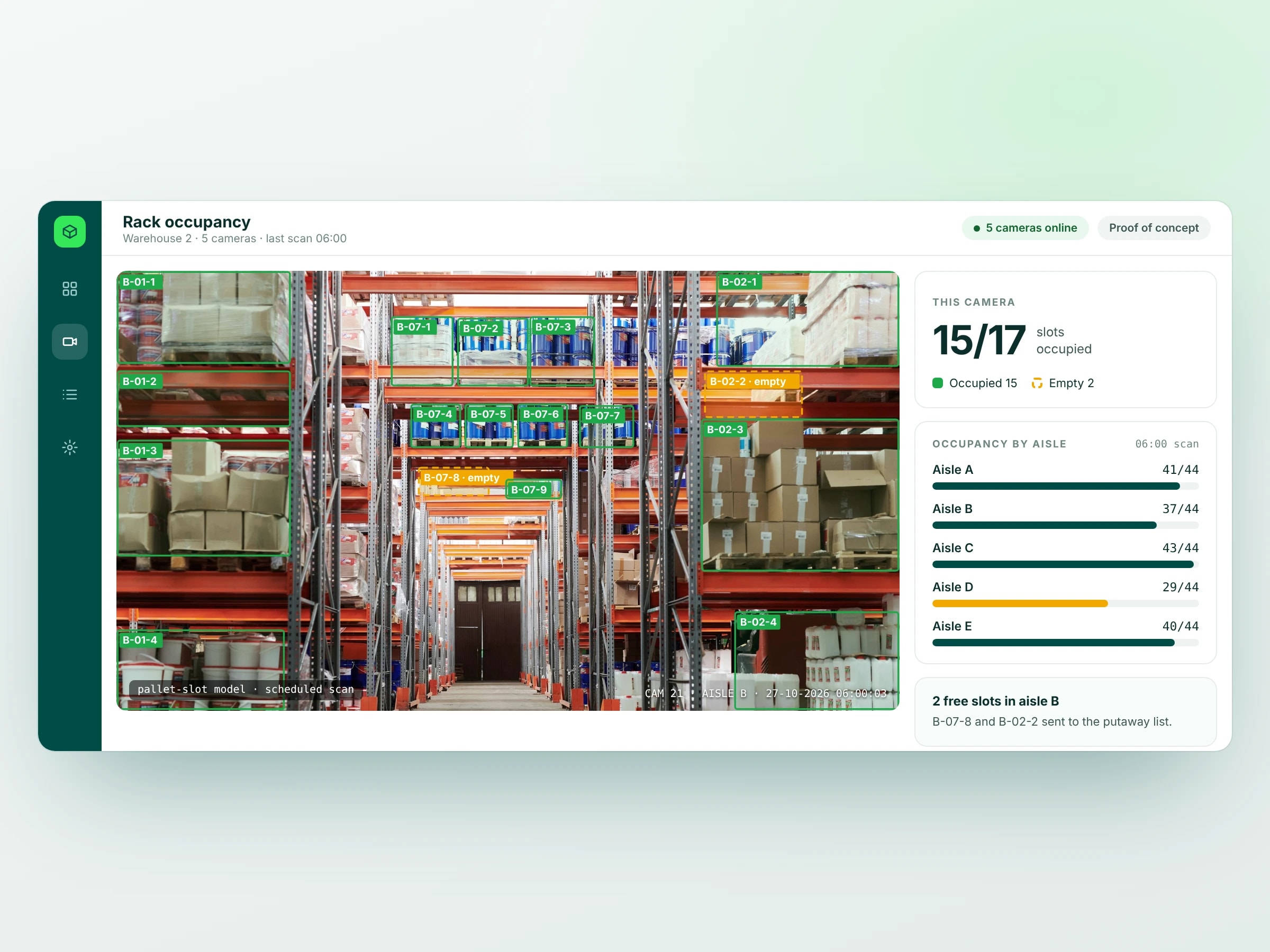
- Pallet CountingPallet counts from phone photos and rack occupancy from fixed cameras, reconciled with warehouse records to highlight discrepancies.View case study
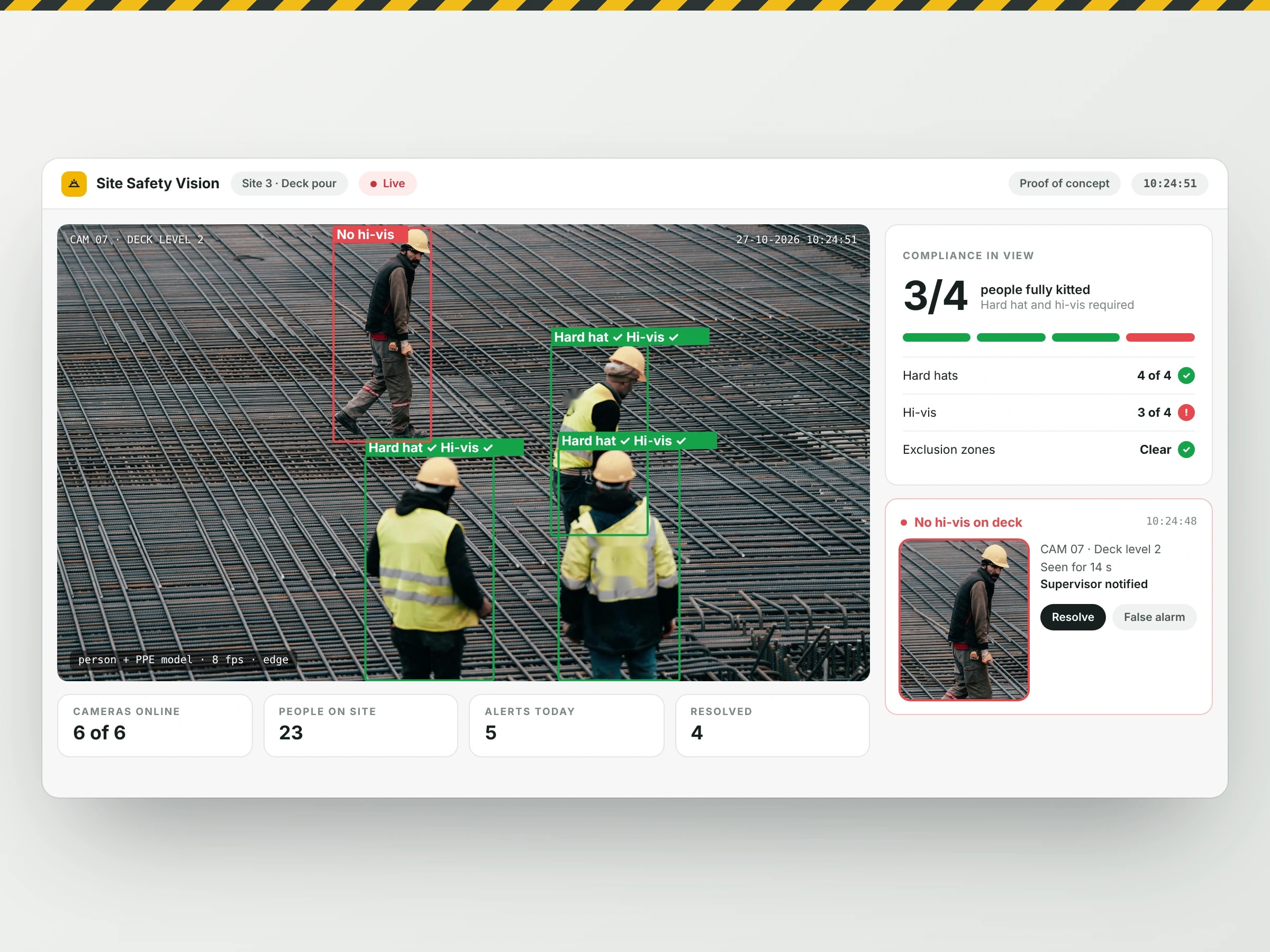
- Construction Site PPE & Safety MonitoringHard-hat and hi-vis checks, pedestrian safety-zone alerts and incident review from existing site cameras.View case study
Still running on workarounds?
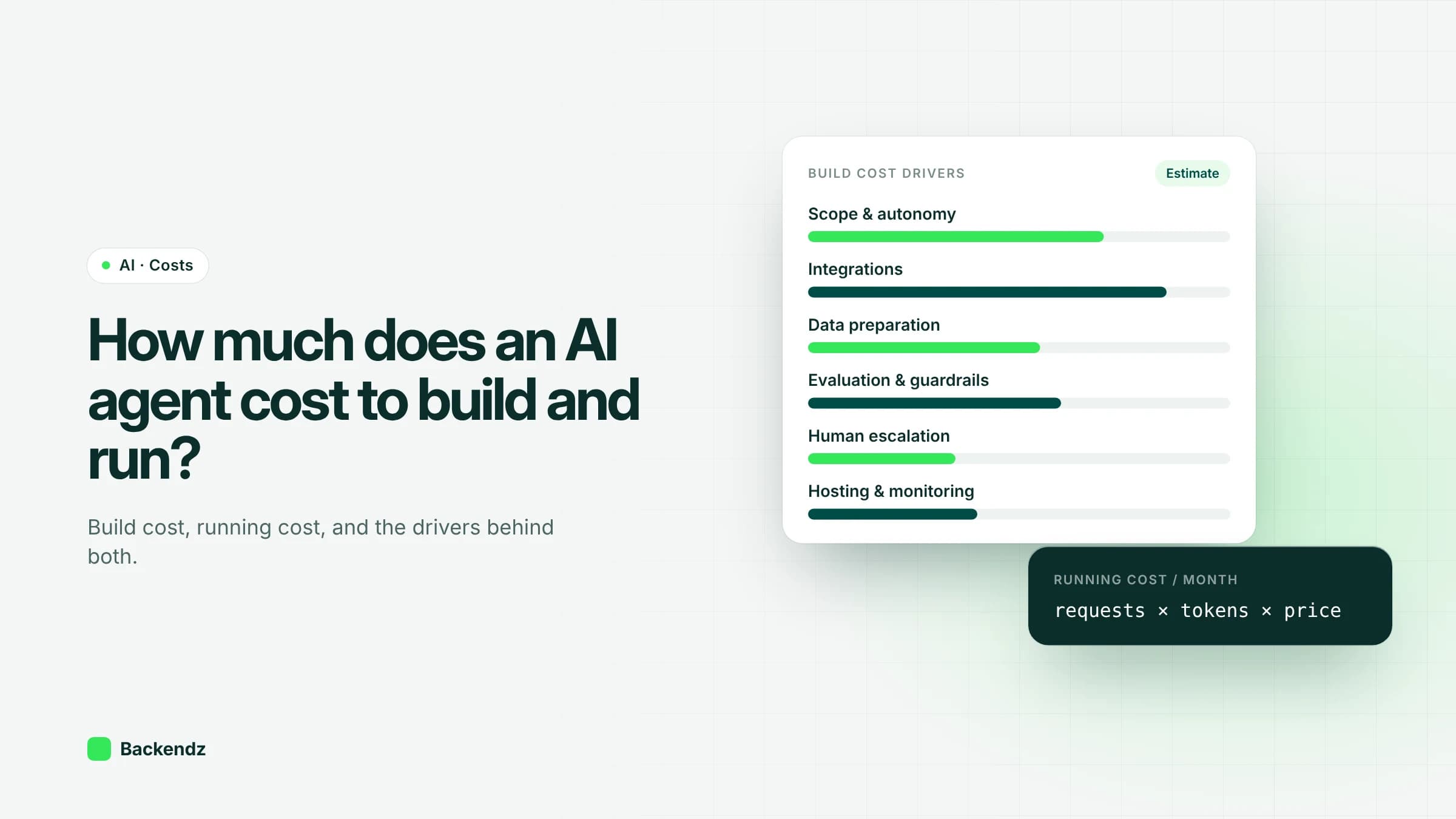 AIHow much does an AI agent cost to build and run in the UK?Read article
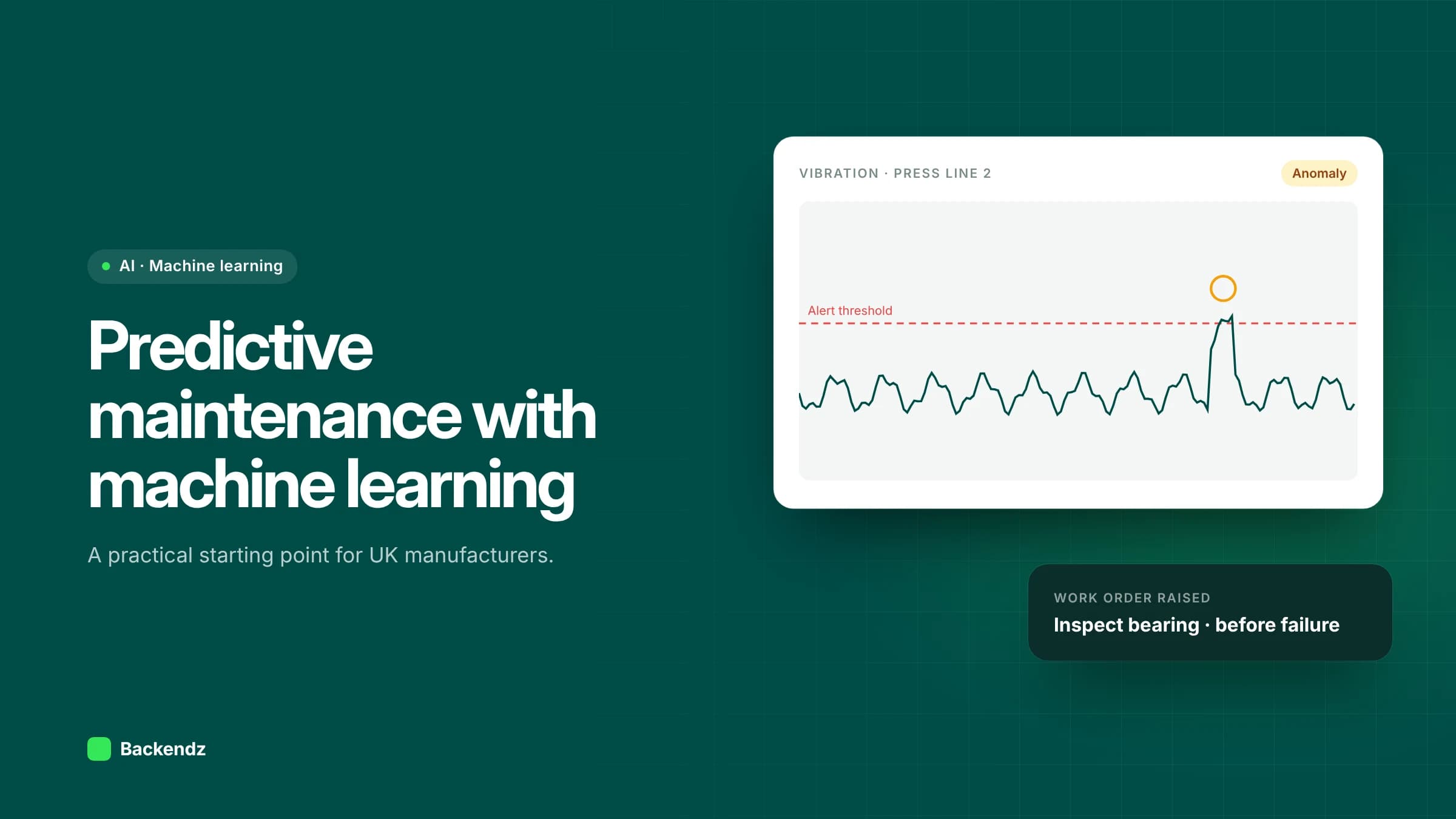 AIPredictive maintenance with machine learning for UK manufacturersRead article
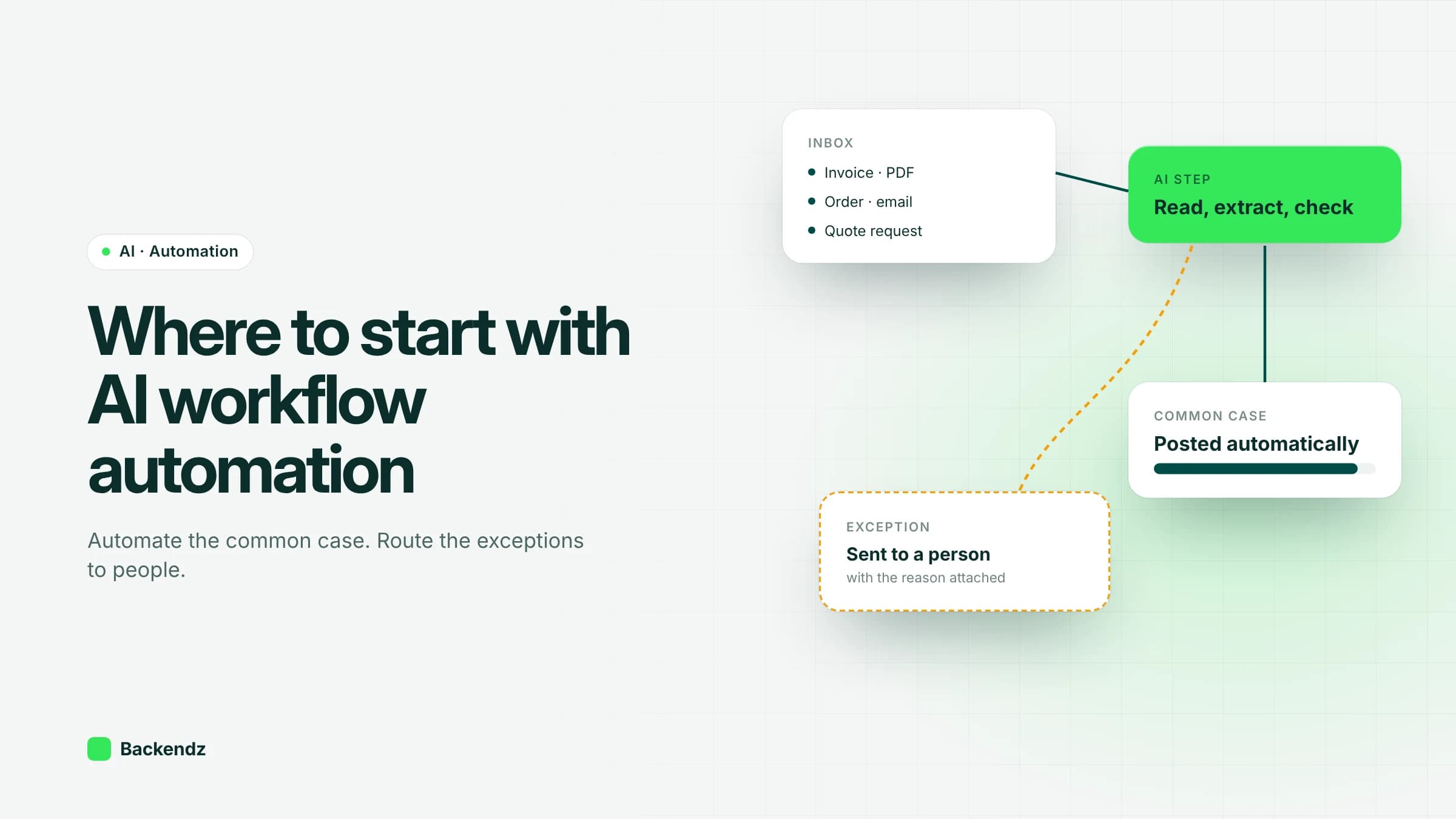 AIWhere to start with AI workflow automation in operationsRead article
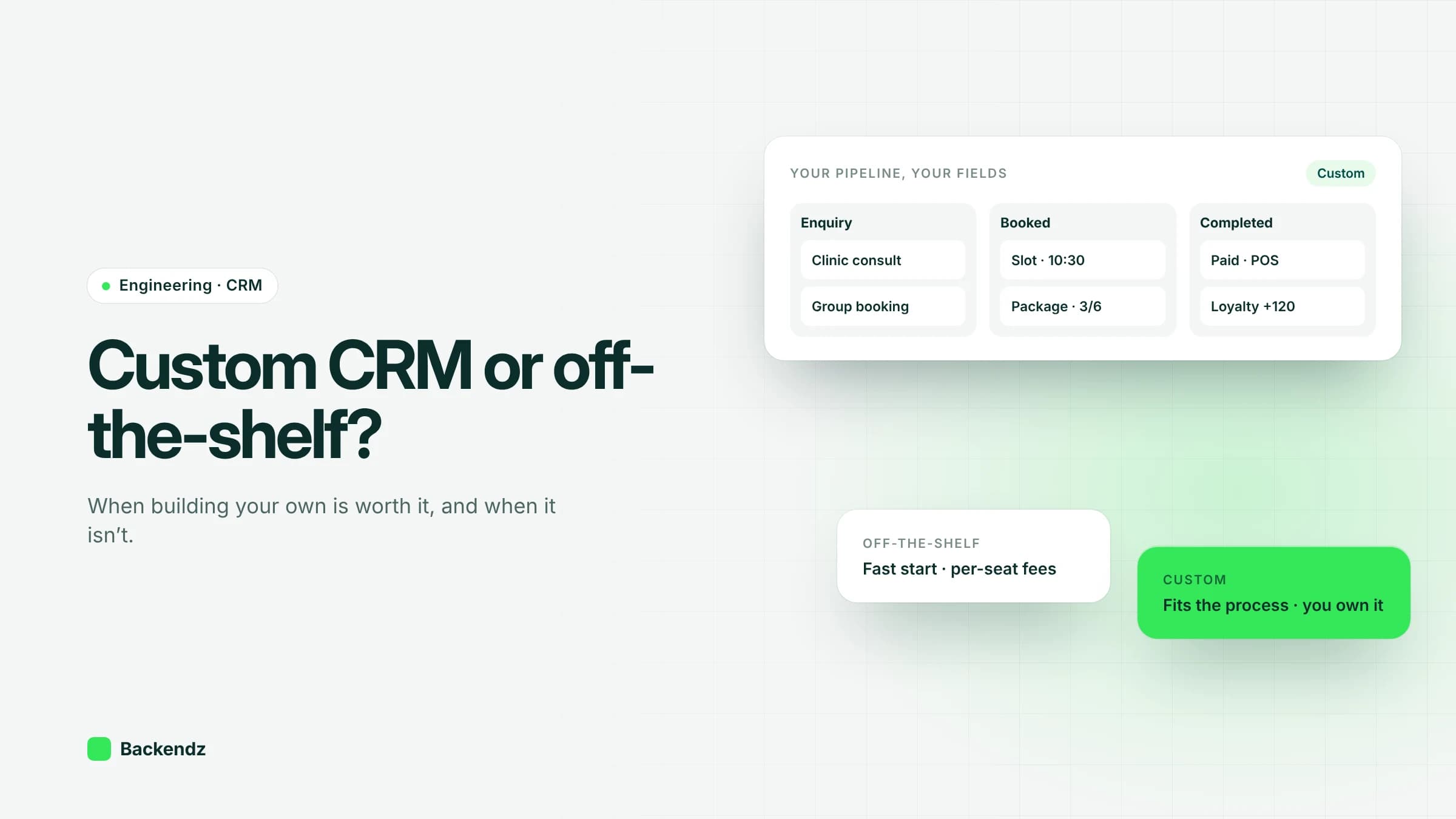 EngineeringCustom CRM or off-the-shelf? When building your own makes senseRead article