Start from the decision
We ask what you would do differently if a number moved, then work back to the measure. A KPI that changes no decision stays off the dashboard.

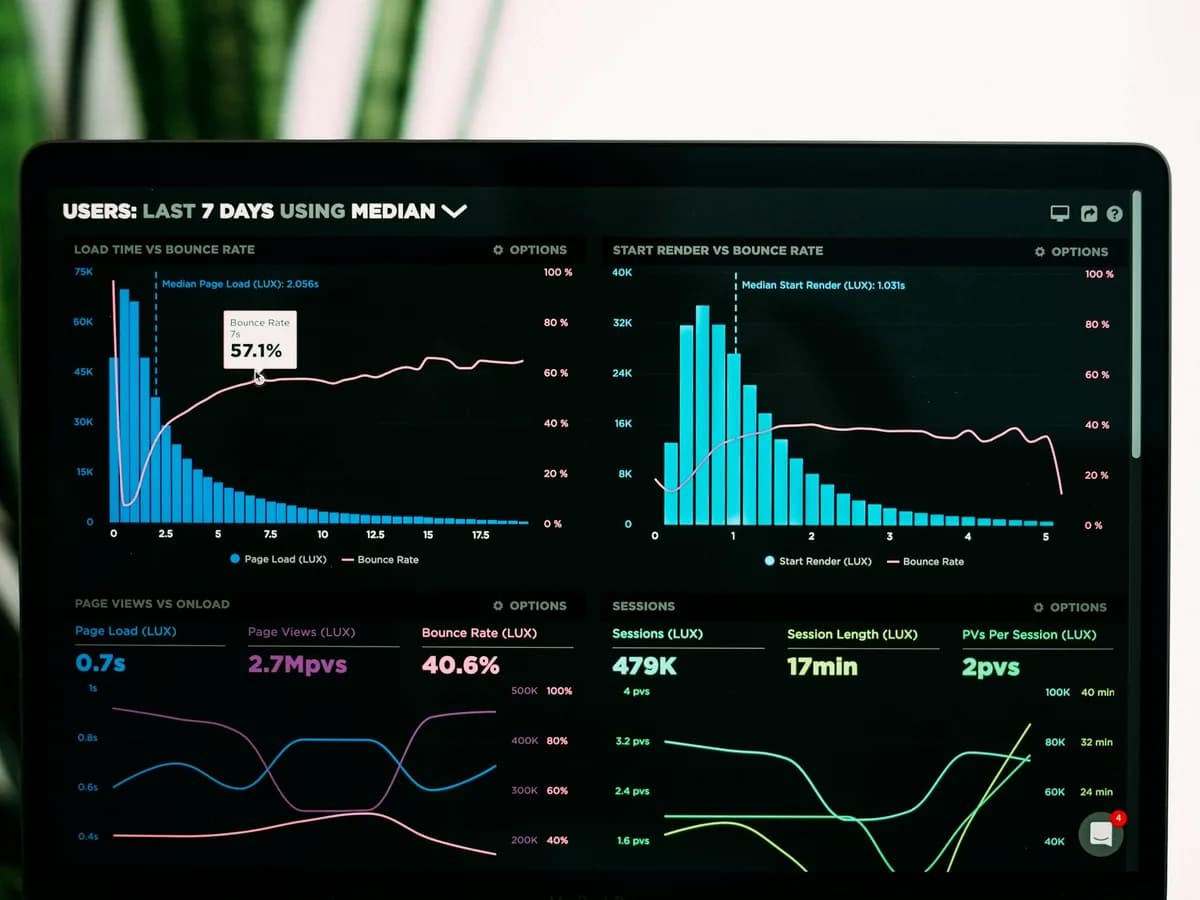
We work with the people who own the numbers to agree the KPIs that matter, plan how reporting should work, and build dashboards and forecasts they actually use. The test of the work is a decision made differently, not another chart nobody opens.
Or see how we engage first — four shapes, no sales call required.
No more dashboards that nobody has opened since launch day
Forget KPIs that every team calculates its own way
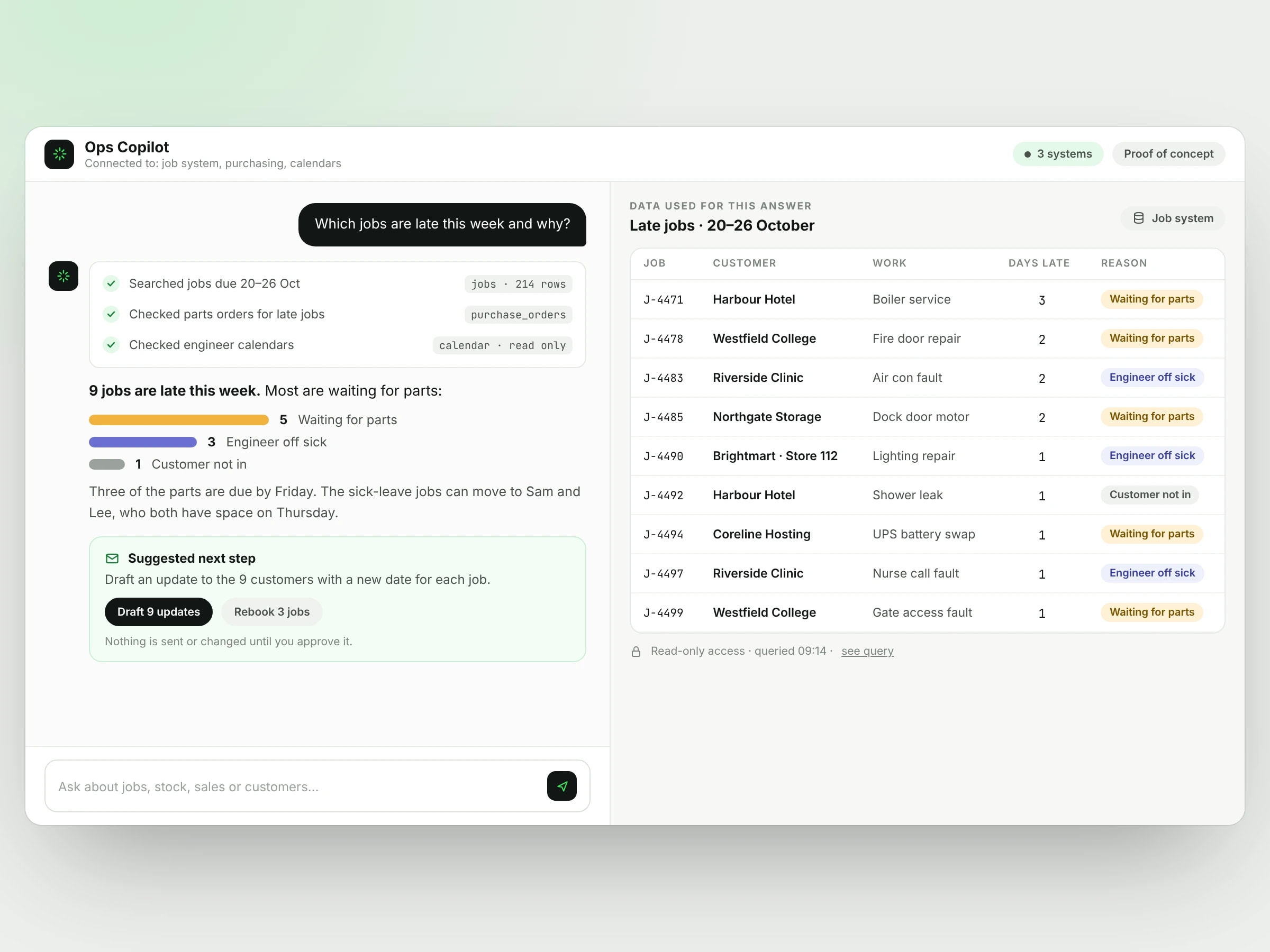
Stop waiting a week for an analyst to answer a simple question
Skip the forecast built from last year plus a hopeful guess
Done with reports that say what happened but never what to do
Say bye to the metric list so long that nothing on it gets acted on
1
named owner in the business for every KPIour rule
1
decision each dashboard exists to supportour rule
0
dashboards built before their question is written downour rule
We ask what you would do differently if a number moved, then work back to the measure. A KPI that changes no decision stays off the dashboard.
Every metric gets a written definition and a named person in the business who owns it. Arguments about what a number means get settled once, with that person in the room.
We watch how a sales manager or an operations lead actually uses the numbers before designing a screen. Fewer charts, the right comparison, and a clear signal when something needs attention.
Self-serve models, documented definitions and training mean your people answer the next question themselves. There is no ticket queue to us for every new cut of the data.
Most enquiries land in one of these. If yours does not, say so on the call — we would rather shape the engagement than sell you the nearest shape we have.
Workshops with the people who run the business, ending in a short set of KPIs that link to its goals, each with a definition and an owner.
Best for: Leadership teams with plenty of reports and no agreed scorecard.
A review of the reports you have, who uses them and for what, followed by a plan for the tools and layers of reporting you need.
Best for: Businesses with several BI tools, or none, and spreadsheets filling the gap.
Dashboards designed with the people who will open them, built in your BI tool, and checked after launch to see whether they changed anything.
Best for: Teams whose current dashboards are ignored or rebuilt in Excel.
Forecasts for demand, sales or cash, built on a method you can follow and measured against what actually happened.
Best for: Planning, finance and operations teams working from last year's figures.
Every card is a build we shipped and still support. Open one for the decisions behind it.
What falls inside this service. Nothing here is an upsell discovered later.
The sequence matters more than the label. Skipping the first one is how projects in this area go wrong.
We talk to the people who run each part of the business about the decisions they make and what they wish they knew when making them.
Operations directors, CTOs and plant managers — the ones still using the system a year after the invoice cleared.
 Freight operator · 14 depotsFreight operator · 14 depots
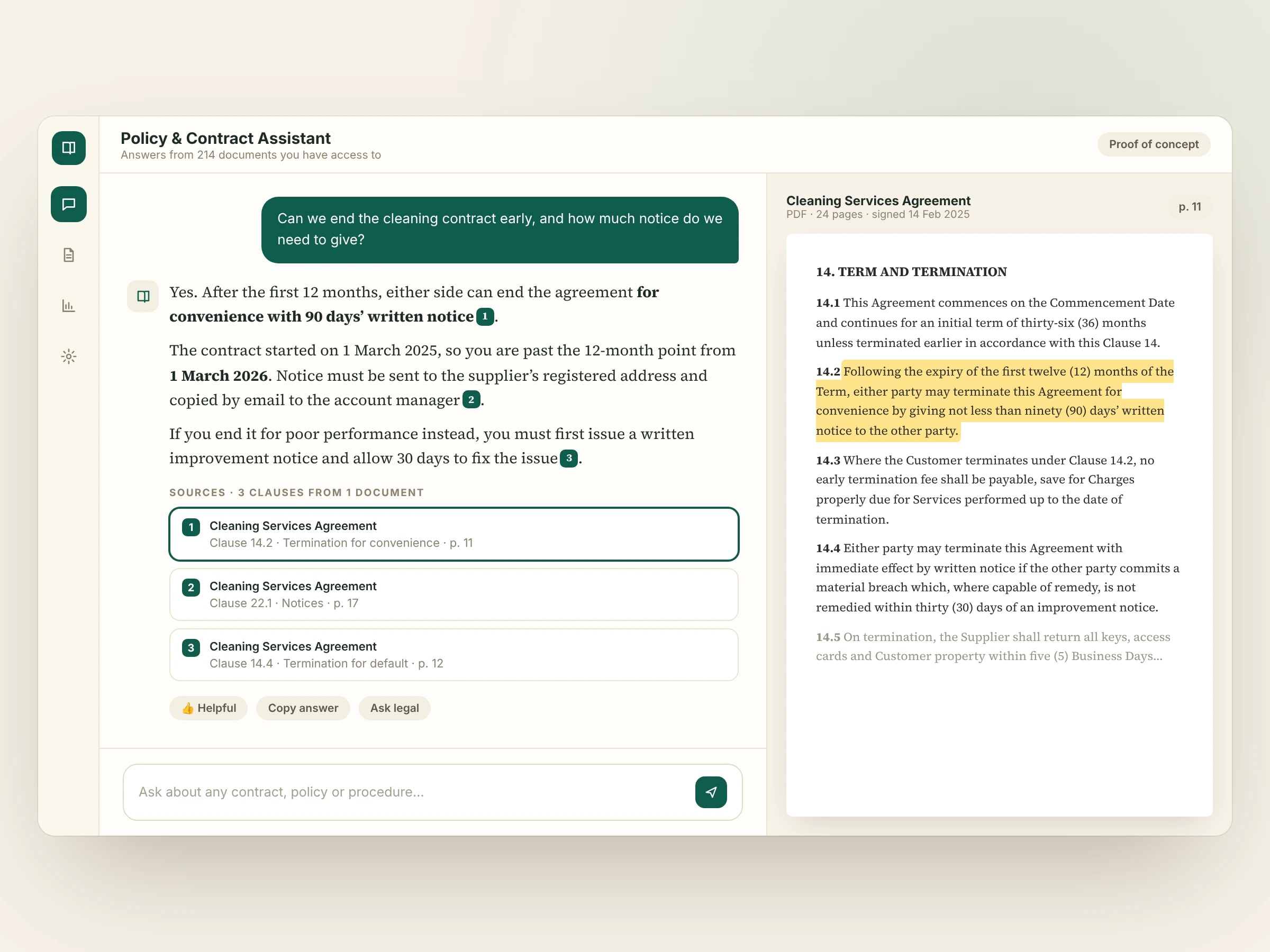
We wanted answers our team could check against the original document. Having the relevant clause beside the response makes the assistant useful when reviewing policies and contracts.
Our rental journey had to work for both vehicle owners and travellers. Backendz brought listings, availability and bookings together into a platform that feels straightforward to use.
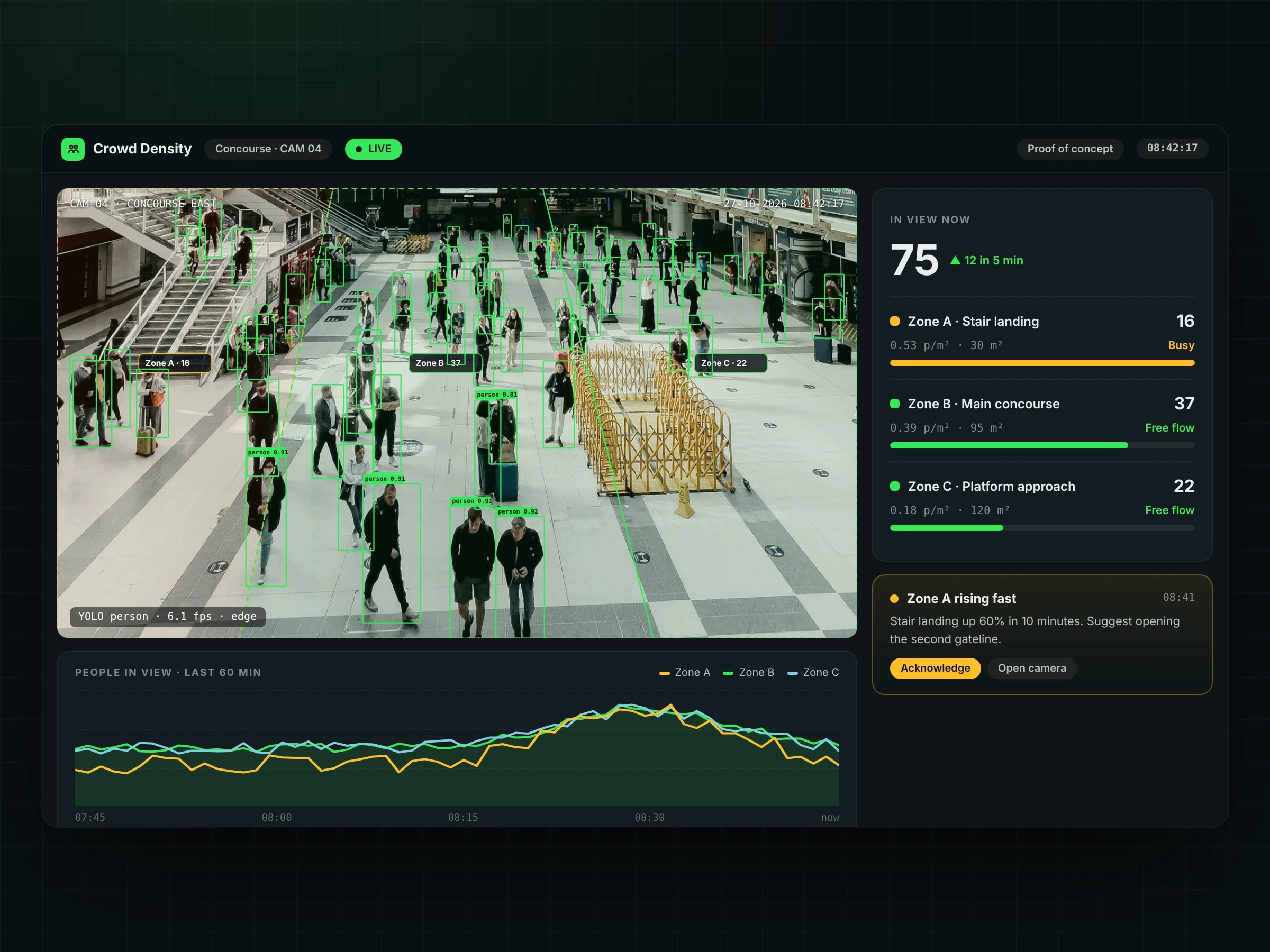
A single headcount does not tell us where congestion is developing. The zone-based view gives our team a clearer picture of how people are moving and where attention may be needed.
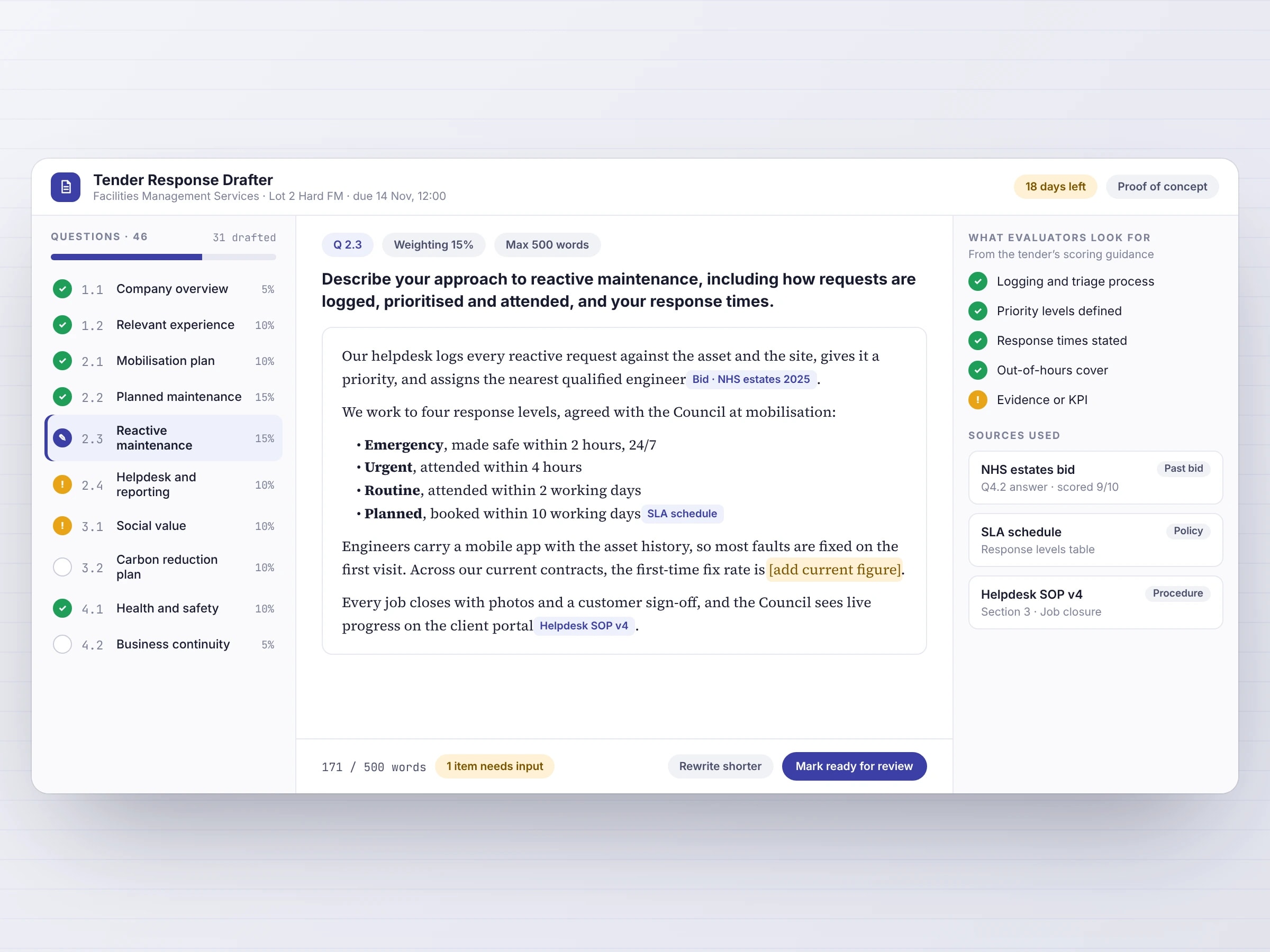
Tender preparation involves gathering evidence and getting the right people to review each section. Backendz brought those steps into one workspace, with drafts our team can check and approve.
Our estimating process needed to reflect how we actually price work. Backendz took time to understand the inputs and rules, then built a quoting journey our team could review and refine.
The team took time to understand how our staff work between appointments. The resulting system brings scheduling and client information together without making the day more complicated.
We could review working features throughout the build and give specific feedback. That made it easier to keep the product focused on the people using it.
Our field team needed access to job details away from the office. The mobile workflow keeps the relevant information close at hand and gives the office a clearer view of progress.
We wanted a client portal that reflected how we deliver our services. Backendz brought documents, requests and progress updates into a straightforward experience for clients and staff.
Our teams were entering the same information into several tools. Backendz mapped the process with us and built a more connected workflow with clear review points.
We needed scheduling, availability and shift changes in one place. Backendz shaped the system around the way our operations team works and stayed involved after launch to help us refine it.
Ask for references and we will put you on a call with the team that runs the system — not a case study PDF.
References available on request
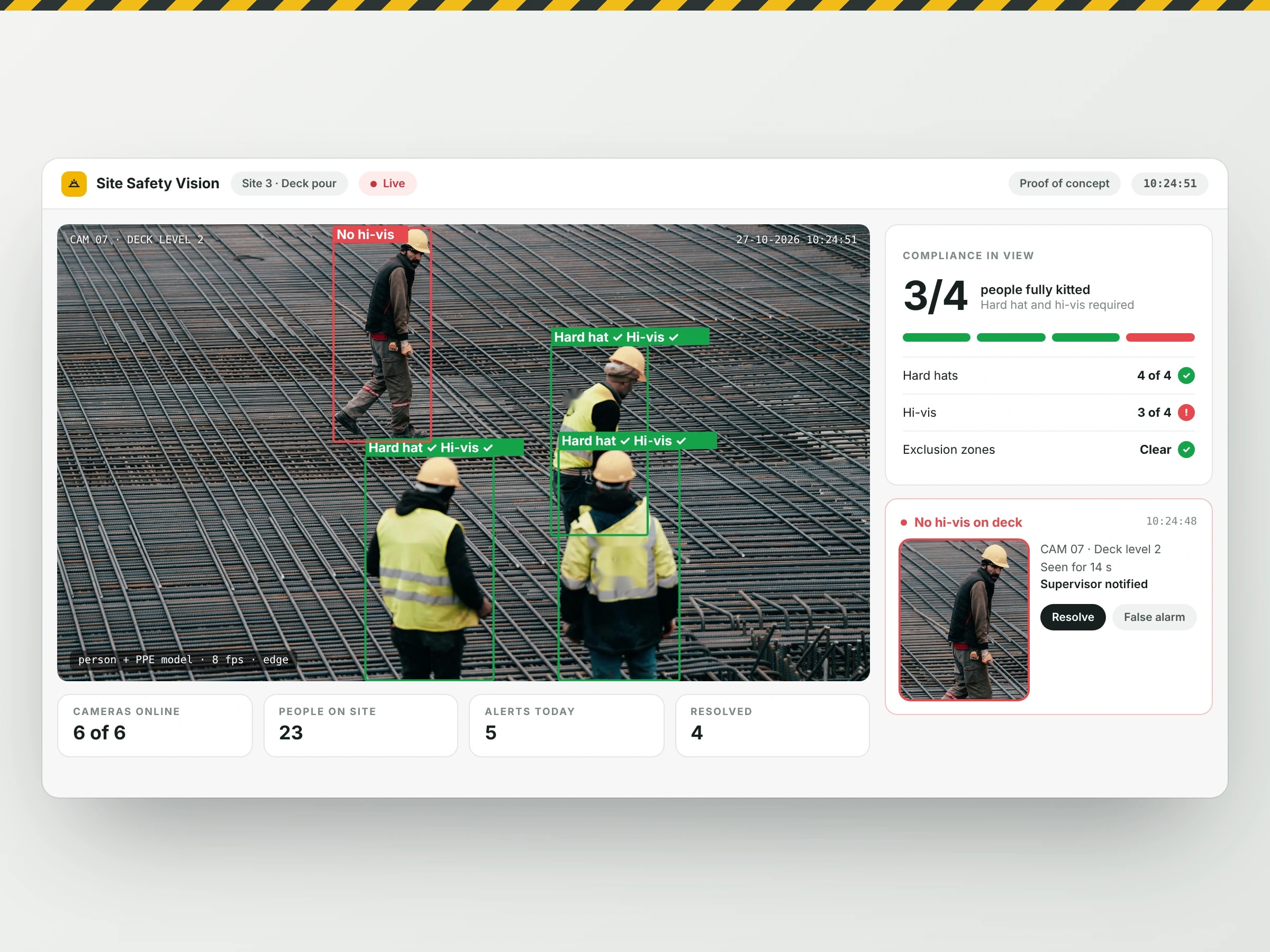
We wanted a practical way to review PPE and safety-zone events using our existing cameras. The team focused on the situations our site managers need to investigate and made the footage easier to review.
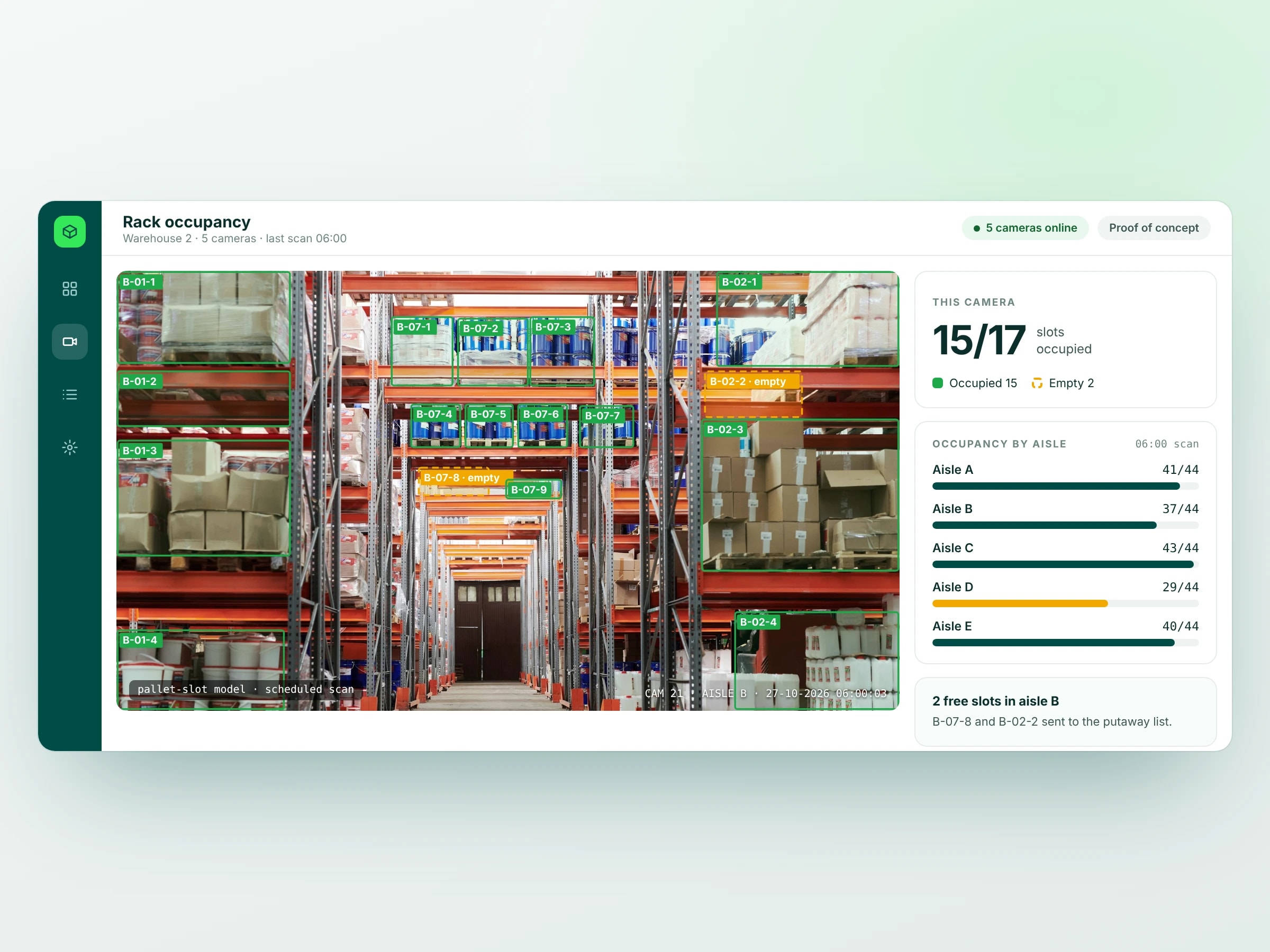
The priority was a counting workflow our warehouse team could use during a normal shift. Backendz connected image-based counts with the records we already use and made discrepancies easier to review.
Our information was spread across several operational systems. Backendz designed a clearer way to ask questions, inspect the supporting evidence and keep approval with our team before an action is taken.
The reconciliation workflow gives our finance team one place to review mismatches and supporting records. We can trace an exception back to its source and decide what needs attention.
We had outgrown the spreadsheets that held our pricing rules. Backendz helped turn that knowledge into a quoting tool we can maintain and explain to new colleagues.
Connecting our sales and inventory systems was the priority. The integration gives our team a clearer view of updates and a practical way to investigate records that need review.
The cloud work started with understanding our existing systems and dependencies. The team documented the setup and gave us a clearer basis for monitoring and ongoing maintenance.
The engineers worked alongside our team and explained their decisions clearly. Code reviews and practical documentation helped us stay involved throughout delivery.
5 yrs
In production
We quote fixed and we hold it
2
Platforms run in-house
46
Services, one team
Senior engineers, not account managers
24/7 production support and monitoring
The things people ask before they commit.
Ask it on the call. We would rather answer an awkward question early than discover it in month three.
Book a callThis is the analytics work on top of the data; data and cloud is the plumbing underneath. Here we define KPIs, plan reporting, design dashboards and build forecasts with your business owners, and if pipelines or a warehouse are missing, the data and cloud work covers that alongside.
No. We can start on the KPI and reporting work with the systems you already have. If the definitions need data joined across systems, we will say so, and a warehouse becomes a scoped next step rather than a precondition.
Usually the one your people already have open. Power BI suits most Microsoft businesses, and Metabase or Looker Studio suit lighter needs; we recommend a change only when the current tool blocks something specific.
We design them with the people who will use them and launch them in a meeting where a decision is made. After launch we check who opens what, and fix or remove what is ignored.
Usually, if there is enough consistent history. We start with a simple baseline, measure it against actuals, and add complexity only when it beats the baseline; if the history is too thin, we tell you before building anything.
Yes, that is the aim. Definitions are documented, models are built for self-serve use, your team is trained, and you own everything we build under the contract.